Eighteen Months Later, the Coupon Stops Working: A Two-Year Receipt Comparison
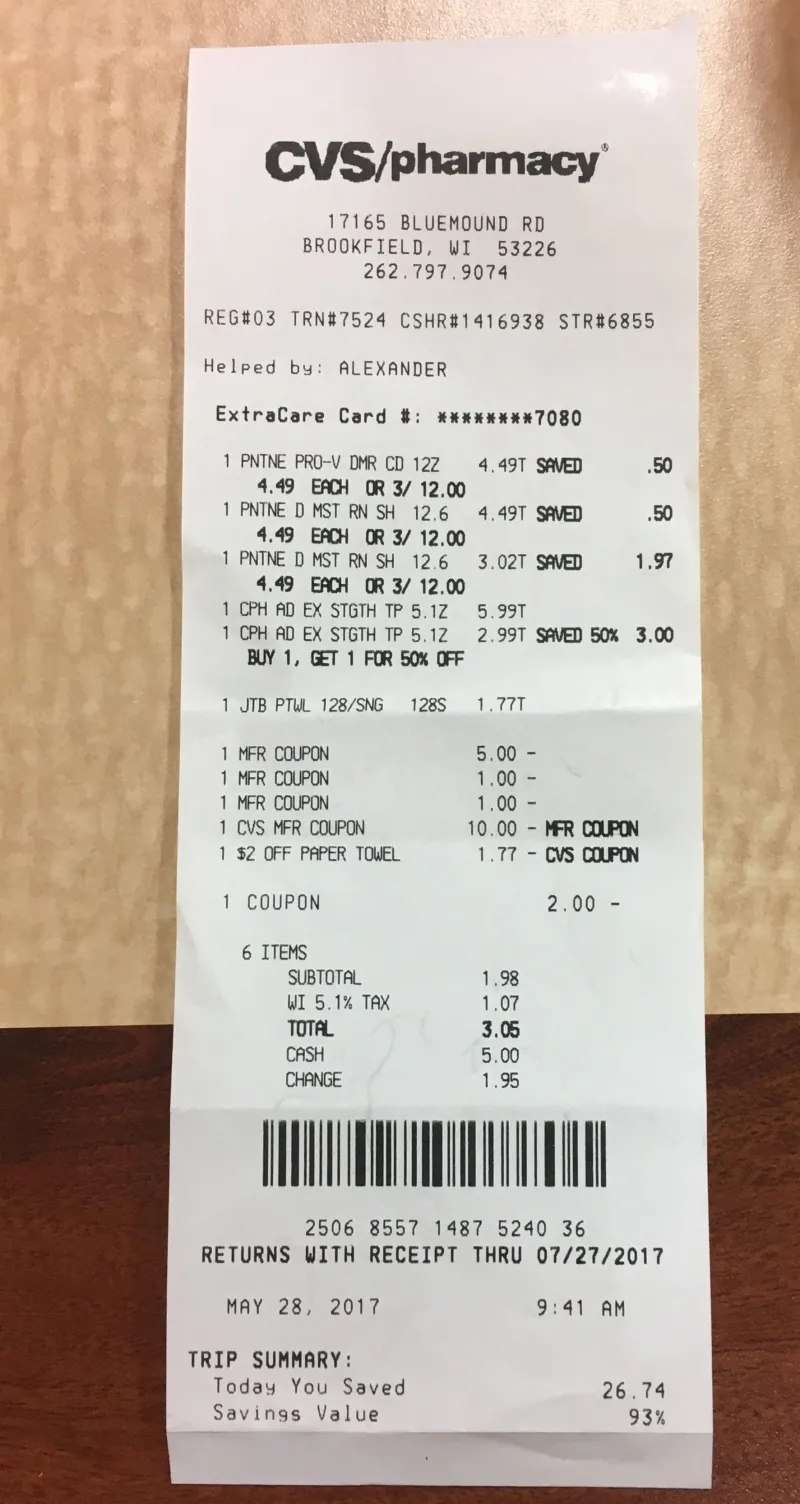
Photo: prescription medication coupon card with pharmacy receipts on table, via i.pinimg.com
There is a particular kind of arithmetic that never appears in a television advertisement. It is the arithmetic of month eighteen — the moment a manufacturer's copay card, so generous in month one, quietly stops doing what it promised. By then, most patients have stopped reading the terms. The coupon has become furniture in the medicine cabinet, assumed to be permanent.
It is not permanent. It was never designed to be.
The Architecture of a Short-Term Discount
Manufacturer savings programs in the United States are marketing instruments, not pricing policy. They exist to keep a patient on a brand-name product while the manufacturer manages the optics of a high list price. The fine print typically includes an expiration window, a lifetime maximum benefit, exclusion for anyone with government insurance, and — most importantly — no obligation to renew on the same terms.
Canadian drug pricing works differently. Provincial formularies, generic competition, and a regulated pharmacy market produce shelf prices that are, by American standards, remarkably stable. The price you pay for atorvastatin or esomeprazole in Toronto this quarter will look very much like the price next quarter. That stability is the entire thesis behind cross-border ordering: you are trading a volatile discount for a predictable price.
A Two-Year Walkthrough
Consider a common scenario: a brand-name medication with a U.S. list price of roughly $440 per month, covered by a commercial plan with a $95 copay, offset by a manufacturer copay card that reduces the patient's share to $10.
Months 1–12. The coupon holds. Total out-of-pocket: $120 for the year. The same medication, ordered as the identical molecule from a licensed Canadian pharmacy at approximately $85 per three-month supply, costs $340 for the year. The coupon wins. No honest commentator would pretend otherwise.
Months 13–18. The coupon hits its annual maximum — commonly $3,800 in cumulative manufacturer savings under the program terms — and the card declines at the counter. The patient's share snaps back toward the full copay, and if the plan has moved the drug to a higher tier, toward $95 or more per fill. Six months at $95 adds $570. The Canadian path continues at $170 for the same half-year. The cumulative gap has narrowed from $220 in Canada's favour to nearly nothing.
Months 19–24. The card expires outright. Now the comparison is raw: $95 per month in the United States against roughly $28 per month from Canada. The second year closes with the American patient having spent approximately $1,140 out of pocket, and the Canadian route approximately $680 — a difference of more than $450 on a single maintenance medication.
The coupon did not fail. It succeeded at exactly what it was built to do: secure the first year of loyalty at a manageable cost to the manufacturer.
How to Spot the Cliff Before It Arrives
Patients can protect themselves with four questions, asked before enrolling in any savings program:
- What is the annual or lifetime maximum benefit? This number, not the monthly discount, determines when the program ends.
- Does the card expire on a fixed date? Many reset or terminate on December 31 regardless of usage.
- What happens if my plan changes? Medicare and Medicaid beneficiaries are excluded from most programs by federal anti-kickback rules — a cliff that arrives the day someone turns 65.
- What is the undiscounted price? The gap between list price and coupon price is a measure of how much room there was all along.
If the answers suggest a benefit that evaporates within a year, the honest comparison is not coupon price versus Canadian price. It is year-two price versus year-two price.
Predictability Is a Form of Savings
Budgeting on a fixed income — as most households managing chronic conditions must — rewards price stability even more than headline discounts. A Canadian order placed through a licensed pharmacy carries the same refill cost in January and in July. There is no enrollment, no eligibility review, no benefit cap waiting to be exhausted.
Coupons are, in fairness, useful tools in their brief season of generosity. But patients deserve to know the season has an end date. Read the terms the way you would read a lease: for the month the discount disappears, not the month it begins. And when that month arrives, the shelf price across the border will be where it always was — unchanged, and waiting.