The Refill That Cost More: How Silent Price Creep Reaches Your Medicine Cabinet

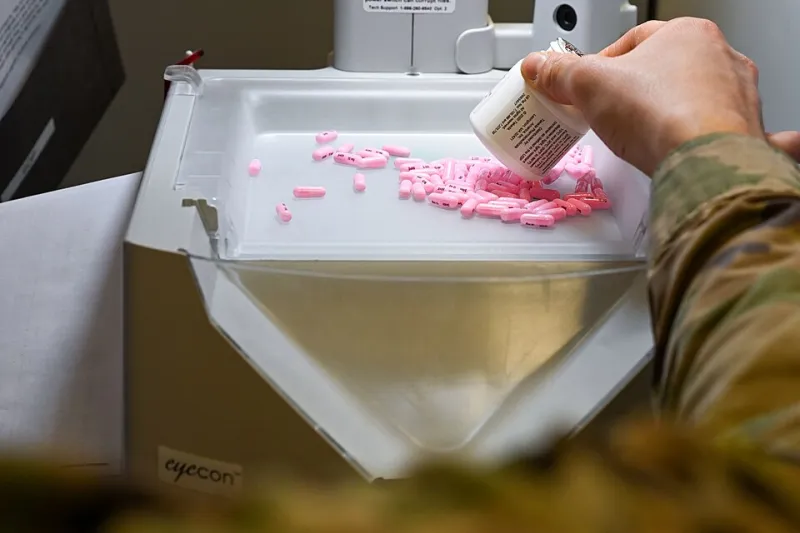
Photo: U.S. Air Force photo by Airman Trevor Calvert, Public domain, via Wikimedia Commons
There is a particular kind of silence in American pharmacy pricing. It is not announced in a letter, flagged on a receipt, or explained at the counter. It simply appears — the same tablet, the same manufacturer, the same dosage — at a price that quietly moved since your last refill. For patients on maintenance medications, this silent creep has become one of the least discussed costs of the American drug supply chain.
The Price You See Is Not the Price You Agreed To
Most consumers assume a prescription price is a stable fact, like the cost of a utility bill. In practice, the price of a maintenance drug in the United States can change between refills for reasons the patient never sees. Pharmacy Benefit Managers (PBMs) renegotiate reimbursement rates. Pharmacies adjust cash prices against a benchmark that itself shifts. A generic medication can move from one supplier to another, and the shelf price follows. None of this requires notice, consent, or explanation.
The result is a pattern that many patients have experienced without a name for it: January's ninety-day supply cost one figure, April's cost slightly more, and by autumn the number has climbed in small, deniable steps. Each increase is too modest to argue about. Together, they can amount to a meaningful annual difference — sometimes enough to force a difficult conversation about whether the medication continues at all.
Why the Creep Goes Unnoticed
Three factors make silent price hikes unusually effective at avoiding scrutiny.
Insurance absorbs the early signals. For patients with coverage, the copay often masks what is happening underneath. The plan's share of the cost rises first; the patient's share rises later, or after the deductible resets. By the time the increase reaches the receipt, the underlying price has already moved several times.
Cash payers are comparison-fatigued. Americans without coverage have learned to expect variation. Discount cards, coupons, and pharmacy loyalty programs produce a different number at every visit, which trains patients to accept price movement as normal rather than question it.
Refills are habitual. Maintenance medications are, by design, routine. The patient who asks a question at the first fill rarely asks one at the twelfth. Pharmacies understand this, and so — one suspects — do the pricing systems that feed them.
A Practical Exercise: Audit Your Own Receipts
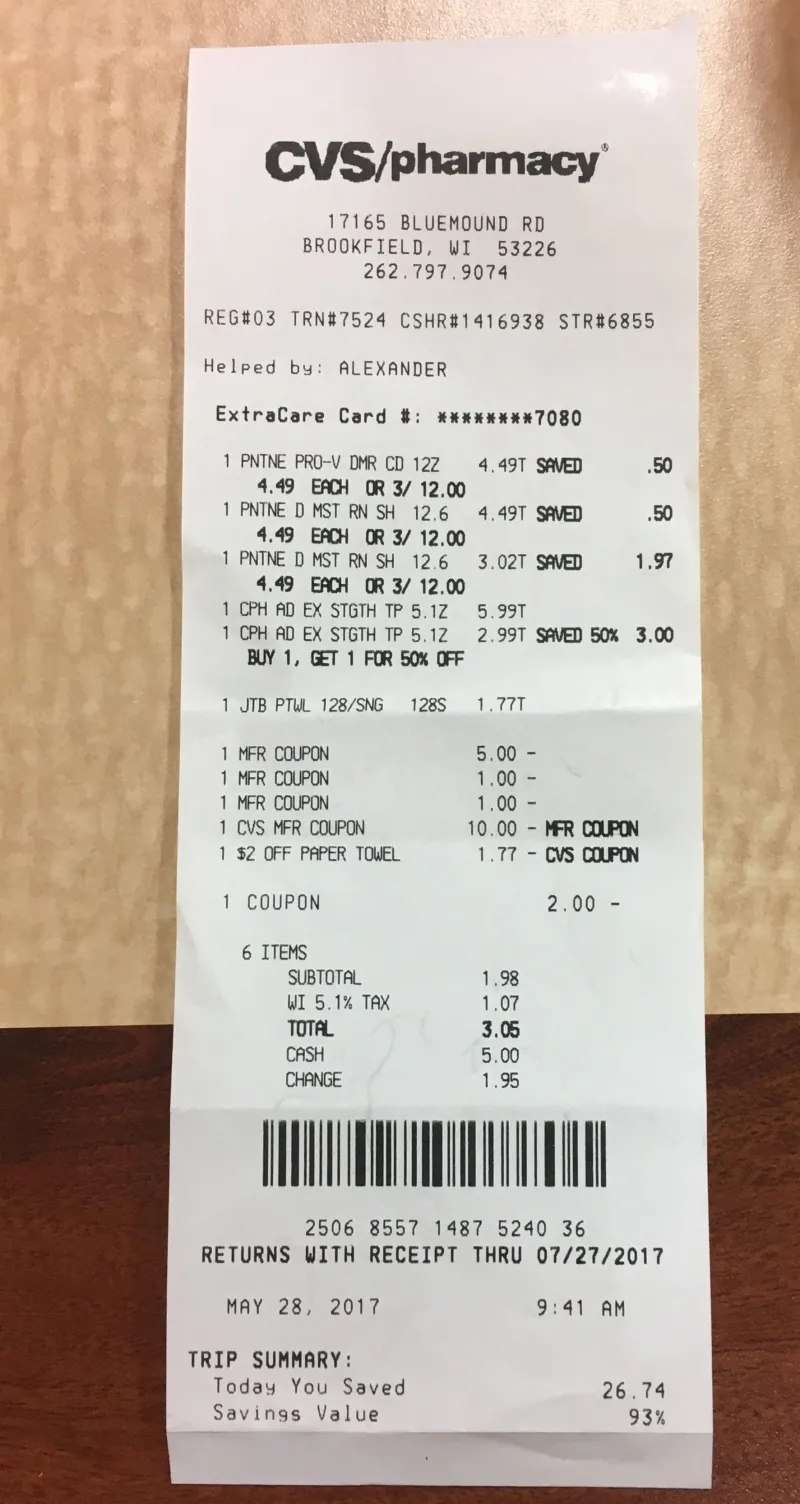
The most effective response to silent creep is documentation, and it requires nothing more than a shoebox of receipts or a few minutes in an online pharmacy account.
- Pull twelve months of refill records for each maintenance medication.
- Normalize the comparison. Divide the total paid by the days supplied, giving you a cost-per-day figure that survives changes in quantity.
- Flag any increase above five percent per refill cycle. Small steps are the signature of creep; a single large jump usually has a different explanation, such as a coverage change.
- Ask the pharmacist to explain the movement. You are entitled to know the cash price of your prescription, independent of any card, coupon, or plan. The answer — or the absence of one — is itself informative.
- Check the drug's price history. For generics, public pricing databases and international references can show whether the increase reflects a market-wide shift or a local one.
This exercise takes under an hour and frequently surprises even careful patients.
The Canadian Contrast: A Price That Holds Still
Here is where the comparison becomes genuinely instructive rather than merely promotional. Canadian prescription pricing operates under a different logic. Patented drug prices are reviewed and capped by the Patented Medicine Prices Review Board, and provincial formularies negotiate aggressively on behalf of their residents. Generic prices, meanwhile, are set through pan-Canadian negotiations that have driven them to a fraction of typical American levels.
The practical consequence for a consumer is stability. A patient ordering atorvastatin or a common antihypertensive from a licensed Canadian pharmacy will generally find that the price this quarter matches the price last quarter — because the regulatory environment does not permit the quiet upward drift that American cash pricing tolerates. When an American orders the same molecule across the border, they are, in effect, purchasing a price lock. The receipt they receive in March is the receipt they should expect in September.
That stability is not a marketing flourish; it is a structural feature of how Canadian drug pricing is governed. And it offers American patients something increasingly rare: a benchmark that does not move.
Using the Benchmark
Once you have audited your own receipts, the comparison becomes straightforward. Take your cost-per-day figure and compare it against the listed price for the same medication and quantity from a licensed Canadian pharmacy. If the American price has crept upward over the year while the Canadian price has held, you have documented exactly the phenomenon this article describes — in your own medicine cabinet.
A few cautions apply. Verify that any cross-border pharmacy is licensed, requires a valid prescription, and employs Canadian-credentialed pharmacists. Confirm that your medication is appropriate for mail-order supply, particularly for temperature-sensitive products. And discuss your plans with your physician, who can help determine whether a 90-day supply is clinically suitable.
The Case for Paying Attention
Silent price creep persists because it is profitable and invisible. It thrives on the assumption that patients do not keep records, do not ask questions, and do not compare across borders. Each of those assumptions is within your power to break. A folder of receipts, a cost-per-day calculation, and one honest comparison against Canadian pricing will not reform the American drug supply chain. But it will tell you, with precision, what the silence has been costing you — and whether the answer lies a border away.