A Different Shape, the Same Active Ingredient: Making Sense of Canadian Generic Names
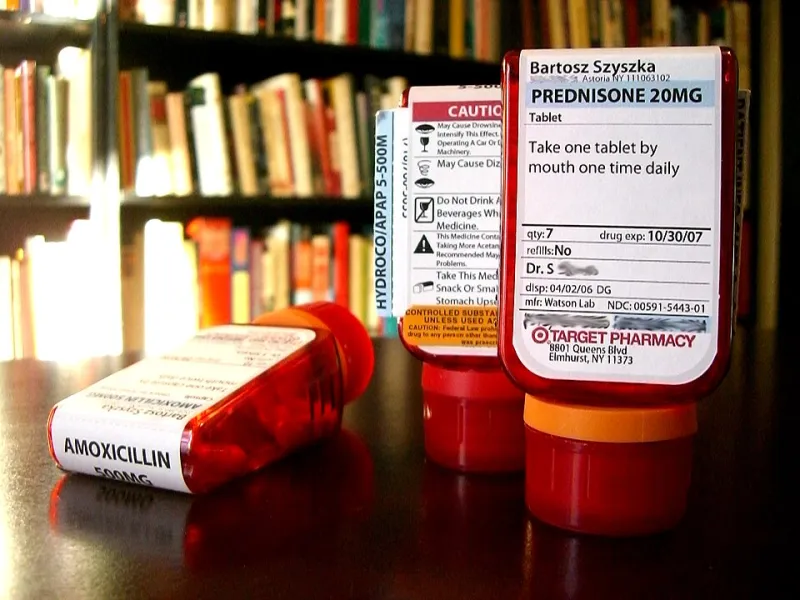
Photo: Bart from New York, USA, CC BY 2.0, via Wikimedia Commons
An American household opens a parcel from a licensed Canadian pharmacy and finds a bottle that does not look like the one on the bathroom shelf. The tablet may be a different colour. The label may carry a name the patient has never used. The strength and the active ingredient, however, are the same. That moment of hesitation is understandable, and it is exactly the moment when a little knowledge about generic medicines is most useful.
Two names for one medicine
Every medicine has at least two names. The brand name is the proprietary name a manufacturer uses in the market. The generic or nonproprietary name is the name of the active substance itself. In Canada, a generic product may be sold under the nonproprietary name, under a manufacturer's own brand, or under a name that differs from the American brand. None of those naming choices changes the active ingredient.
Health Canada approves a generic drug only after the manufacturer demonstrates that it is bioequivalent to the reference product. In practical terms, bioequivalence means the generic delivers the same active ingredient to the body at a comparable rate and extent. The strength, dosage form, and route of administration must also match. The approval is recorded with a Drug Identification Number, or DIN, which is specific to the Canadian product.
What 'same' does not mean
Bioequivalence is not the same as visual identity. A generic tablet can be a different colour, shape, or size. It can carry a different imprint. Those differences often come from inactive ingredients, known as excipients, which bind, coat, preserve, or colour the tablet. They can also reflect manufacturing equipment, trademark concerns, or the manufacturer's own production standards.
For most patients, those differences are cosmetic. For a small number of patients, an excipient can matter. A person with a documented allergy to a dye or filler should tell the pharmacist before ordering. A person who has trouble swallowing a particular tablet shape should also speak up. The point is not to assume that every difference is dangerous, but to treat the label as a source of information rather than a source of alarm.
How to verify what is in the bottle
Start with the label. Confirm the active ingredient, the strength, the dosage form, and the DIN. Compare those details with the prescription your clinician sent. Then check the pharmacy. A licensed Canadian pharmacy should be able to provide its licence details and the name of the pharmacist responsible for the file. CanadaRxPharma, like any legitimate cross-border service, should make that information easy to find.
Public tools can help. Health Canada maintains a drug product database that lists approved products, their DINs, and their manufacturers. A pharmacy's provincial licensing body can confirm that the pharmacy is in good standing. Neither step requires special access, and both are worth doing before a first order becomes a routine.
Questions worth asking a pharmacist
A short, specific conversation closes most of the gap. Ask which active ingredient the product contains, whether it is considered interchangeable with the American product, and whether the inactive ingredients differ in any way that matters for you. Ask for the product monograph if you want the technical detail. Ask who will review the prescription and how the pharmacy handles a recall or a formulation change.
Those questions are not a challenge to the pharmacist. They are the same questions a careful patient would ask at any counter. A good pharmacist will answer them plainly and will flag any issue that needs a prescriber's attention.
When a difference deserves attention
Appearance alone is not a reason to stop a medicine. A new symptom, a suspected allergic reaction, or a change in how a medicine affects you is. If any of those occur, contact your prescriber or pharmacist promptly. Keep a simple record of the product name, the DIN, and the date you started the new supply. That record makes a future conversation much easier.
A Canadian generic may look unfamiliar. Its name may not match the name on an American receipt. Those differences are normal in a system that approves products by active ingredient and bioequivalence rather than by colour. The bottle deserves a second look, but the second look should be informed. Read the label, verify the pharmacy, and ask the questions that matter.