The Generic Equation: Why Canada Pays a Fraction for the Same Medicine
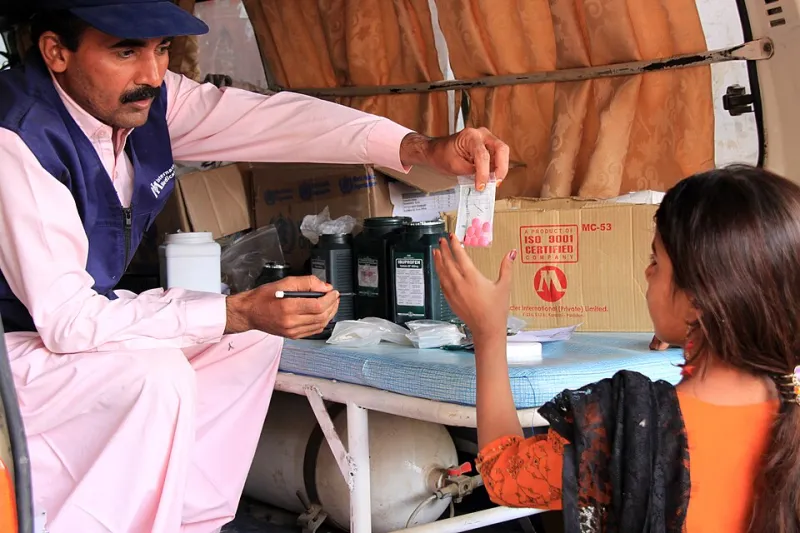
Photo: DFID - UK Department for International Development, CC BY 2.0, via Wikimedia Commons
Walk into any pharmacy in Toronto or Vancouver with an American prescription, and a pattern quickly emerges: the generic version of a medication often costs a small fraction of what the identical pill sells for across the border. This is not luck, and it is not a sign of lower quality. It is the result of deliberate policy decisions about how generic drugs are approved and priced.
A Different Approval Pathway
In Canada, generic medications are reviewed by Health Canada, the same federal agency that approves brand-name products. Generics must demonstrate pharmaceutical equivalence — the same active ingredient, dosage form, strength, and route of administration — and must be shown to be bioequivalent, meaning they deliver the drug into the bloodstream at the same rate and extent as the original.
What Canada does not do is require generics to repeat the full clinical trial process. Because the originator drug has already proven safety and efficacy, generic manufacturers submit comparative data instead. This abbreviated pathway, similar in principle to the American ANDA process, keeps development costs down — and in Canada, those savings are passed along rather than absorbed by intermediaries.
The Pricing Mechanism Makes the Difference
The deeper story is structural. Provinces negotiate generic prices directly, and most jurisdictions have set reference prices at a defined percentage of the brand-name cost — commonly in the range of 18 to 25 percent for the first generic entrant, dropping further as additional manufacturers compete. Provincial drug plans, which cover seniors and social assistance recipients in provinces like Ontario and British Columbia, give governments enormous purchasing leverage.
The Pan-Canadian Pharmaceutical Alliance, a consortium of provincial and federal drug plans, negotiates prices collectively. When a government that buys medication for millions of people sits down with a manufacturer, the resulting price looks very different from the list price an uninsured American encounters at a retail counter.
Consider atorvastatin, the generic form of Lipitor. A 90-day supply at a typical U.S. cash price can run well over $100; the equivalent supply through a licensed Canadian pharmacy is frequently available for under $30. Similar gaps appear with metformin, lisinopril, and escitalopram.
What a Canadian Pharmacist Sees
"The most common question I get from American customers is whether the generic in their box is 'the real thing,'" says one pharmacist at a licensed dispensary in Manitoba. "I explain that Health Canada approved it, that it contains the identical molecule, and that the tablet may simply look different because a different company holds the trademark on the shape and colour. That's usually all the reassurance people need — the price does the rest."
Pharmacists emphasize that switching from a brand to its generic equivalent is, in most cases, clinically routine. Exceptions exist — narrow therapeutic index drugs such as warfarin or certain thyroid medications warrant closer monitoring — but a pharmacist can flag those situations during a standard review.
How to Request the Swap
For Americans ordering through a legitimate Canadian pharmacy, the process is straightforward:
- Ask your prescriber whether a generic equivalent is appropriate, or whether "dispense as written" appears on your prescription.
- When submitting your order, request the generic by its generic (non-proprietary) name.
- Provide a complete medication list so the dispensing pharmacist can screen for interactions and duplication.
- Expect the dispensing pharmacist to contact you if a substitution raises a clinical question.
The Bottom Line
Canadians save billions annually through generic substitution, and those same savings are available to Americans who order through licensed, verified Canadian pharmacies. The medicine is the same. The system paying for it is simply built differently — and built, in this case, to cost less.