The Ten-Minute Doorstep: A Repeatable Inspection Routine for Every Canadian Package

Photo: U.S. Department of State from United States, Public domain, via Wikimedia Commons
Most guidance about ordering from a Canadian pharmacy ends where the tracking page says delivered. In practice the least supervised part of the entire journey is the one that follows: the parcel on the step, in whatever weather the afternoon produced, for however long it takes someone to bring it inside.
The good news is that inspection is a skill measured in minutes, not expertise. Ten minutes at the door, done the same way every time, will catch nearly everything worth catching. What follows is that routine, in order.
Why the Doorstep Deserves a Procedure
A package travelling from a Canadian dispensing pharmacy has passed through a chain of documented checks — the prescription verified by a licensed pharmacist, the order packed, the shipment tracked. The doorstep is the first point in that chain where no one is watching. A crushed corner, a broken tamper seal, a gel pack that has gone warm, a lot number that does not match the invoice: each is easy to spot in the first ten minutes and difficult to prove later.
A fixed routine also removes the temptation to open the box in a hurry, take a tablet, and read the label afterwards. Sequence is the safety feature.
Minute Zero to One: Photograph the Box Unopened
Before the seal is cut, take one photograph of the parcel as it arrived. Include the shipping label and any visible damage — a dented corner, a wet patch, a footprint, a crushed end. Take a second photograph if the box was left in an exposed position, such as a porch or a vestibule, where temperature is a concern.
This takes twenty seconds and settles most later disputes. A pharmacy handling a damage or temperature claim will ask what the package looked like on arrival; a photograph answers the question before it is asked.
Minute One to Three: The Seal and the Tamper Evidence
Check the outer closure first. Canadian pharmacies typically use tamper-evident tape or a sealed carton, sometimes both. Look for tape that has been cut and re-stuck, a carton end that lifts without resistance, or a shrink band that is split.
Inside, check the container itself. Bottles should have an intact induction seal or a sealed cap; blisters should be continuous, with no broken pockets and no missing tablets. A desiccant sachet should be present if the product requires one. If any seal is compromised, stop there — do not open the bottle further, and do not take a dose from a broken blister. Set the item aside and photograph it as it sits.
Minute Three to Five: Temperature, the Quiet Variable
Temperature-sensitive items deserve their own step. Insulated shipments usually arrive with gel packs and a liner; the useful question is not whether the pack is still frozen but whether it is still cool, and whether the product inside shows any sign of having been through a freeze or a heat event.
A few practical rules. Never place an insulin product in a freezer to cool it down; freezing damages it, and the damage is not always visible. Do not refrigerate an item before you have read the storage instruction on the label, because some products must be kept at room temperature. If a liquid has clearly frozen in transit, contact the pharmacy before use rather than after. And if the package sat on a summer porch or a winter step for an extended period, say so when you call — the pharmacy can advise on that specific product rather than in general.
Minute Five to Seven: Lot, Expiry, and the Invoice
Now take the invoice or packing slip from the box and set it beside the labelled container. Match four items line by line: the drug name, the strength, the quantity dispensed, and the lot number with its expiry date.
A mismatch is unusual, and it is exactly the sort of thing a routine exists to catch. The quantity should agree with what was billed. The lot on the bottle should be the lot on the paperwork, because the lot is what the pharmacy would trace if a manufacturer notice ever applied to that batch. The expiry should be comfortably in the future, especially on a 90-day supply ordered in November for use into the new year.
Minute Seven to Nine: Count, Then Look
Count the units. A 90-day supply with a once-daily direction should contain ninety tablets; a twice-daily direction, one hundred and eighty. Counting is tedious and takes about a minute. It is also the only way to know before the last week of the supply whether the order was short.
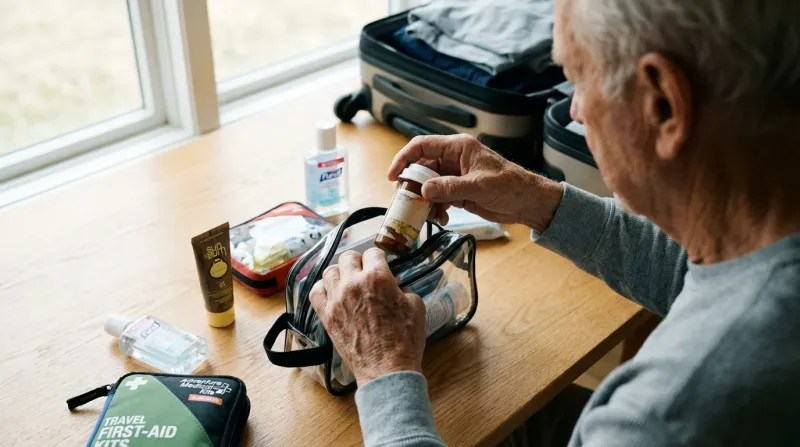
Then look at the tablets themselves. Canadian generics may be a different shape or colour from the American product you are used to, and that difference is often normal. What should not be normal is a tablet that is chipped, discoloured, or visibly different from the others in the same bottle. If the appearance gives you pause, call the pharmacy and describe it before taking a dose.
Minute Nine to Ten: Record, Decide, Report
Finish with three actions. Record the lot and expiry in your medication file, alongside the date the parcel arrived. Decide whether the product is fit to store, and put it in the correct place — refrigerator, cupboard, away from light — according to the label rather than according to habit. And if anything looked wrong, report it the same day.
When Something Looks Wrong: What to Send
Most Canadian pharmacies publish a window within which they will address a damaged or incorrect shipment, so the first call should happen promptly. Have five photographs ready: the unopened box, the damaged area, the compromised seal, the label showing lot and expiry, and the invoice page. Keep the box and all packing material until the matter is resolved; a gel pack and a shipping carton are evidence, and they are difficult to reconstruct later.
Describe the problem in plain terms — what arrived, what was wrong, when it was delivered and how long it sat outside. Ask what the pharmacy recommends for the specific product, especially if it is a cold-chain item. Do not use a product you believe has been compromised while you wait for an answer.
What Not to Do
Do not discard the packaging before checking the contents. Do not take a first dose from a new shipment in the same minute the box is opened, before the lot and strength have been matched to the paperwork. Do not assume a warm gel pack means the medication is ruined, or that a cold one means it is fine — check the instruction on the label and ask. And do not treat the doorstep as the end of the process; it is the last quality check the household performs itself.
Ten Minutes, Repeated
A first delivery takes perhaps fifteen minutes because everything is unfamiliar. The second takes ten. By the third, the routine is a habit of the kind that quietly protects a household: box photographed, seal checked, temperature noted, lot matched, units counted, records updated.
The pharmacy has done its part before the parcel left the building. The ten minutes at the door are yours, and they are the cheapest insurance in the whole arrangement.