On the Inspection Table: A Border Official's View of Your Prescription Package
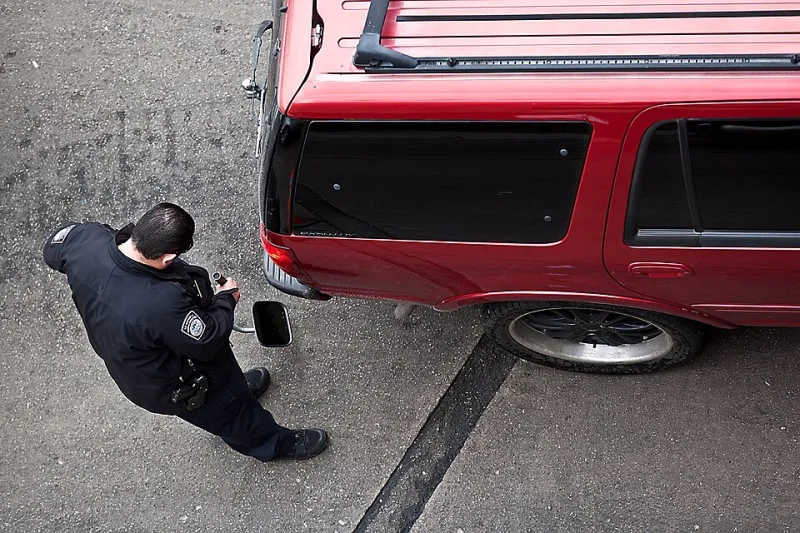
Photo: CBP Photography, Public domain, via Wikimedia Commons
Every day, hundreds of thousands of parcels cross into the United States from Canada. A small fraction of them contain prescription medication ordered by American consumers. For the people handling those parcels — customs officers, border protection officers, and the regulatory staff who advise them — each shipment is not a political statement about drug pricing. It is a box with paperwork attached, subject to a defined set of rules. Understanding those rules, from the inside out, is the most reliable way to know whether your order will reach your doorstep or end up in a refusal letter.
The Policy That Makes Room for Personal Orders
The starting point is a provision most consumers have never read: the FDA's personal importation policy. Formally, American law requires that imported prescription drugs be approved by the FDA and manufactured in facilities the agency has inspected. Strictly applied, that would prohibit nearly every cross-border prescription order.
In practice, the FDA has long exercised what it calls enforcement discretion for small, personal quantities of medication. The policy is not a loophole and it is not an amnesty. It is a statement of priorities: the agency generally does not pursue individuals importing a limited supply of a medication for personal use, provided certain conditions are met.
Those conditions matter, and legitimate Canadian pharmacies build their operations around them:
- The drug is for the personal use of the person ordering it, or an immediate family member under their care.
- The quantity is typically limited to a 90-day supply or less.
- The medication is based on a valid prescription from a licensed American prescriber.
- The drug is not a controlled substance and is not one of the categories the FDA treats as categorically high-risk, such as certain biologics or compounded products.
A pharmacy that asks for your prescription, caps your order quantity, and declines to ship restricted items is not being difficult. It is aligning itself with the framework that allows personal importation to function at all.
What a Package Actually Encounters
Once a parcel leaves a Canadian pharmacy, it enters a sorting environment most consumers never see. Mail and express shipments are screened at international processing facilities — places like the John F. Kennedy International Mail Facility in New York, the hub in Los Angeles, or the sorting centres in Chicago and Miami, alongside the major Canadian export points in Toronto and Vancouver.
Screening is largely non-invasive. Parcels move through X-ray imaging, and officers review customs declarations and shipping manifests. Officers are trained to look for inconsistencies: a declaration that does not match the parcel's weight or density, a sender address with no verifiable pharmacy licence, packaging that suggests concealment, or shipment volumes that look commercial rather than personal.
Most parcels that contain prescription medication, properly declared and properly packaged, generate no flags at all. They are released and enter the domestic mail stream without a human hand ever opening them. The system is designed for throughput; inspection is the exception, not the rule.
What Triggers a Closer Look
Inspection referrals tend to cluster around a handful of characteristics, and consumers can learn from them:
- Ambiguous or false declarations. A parcel labelled as "health supplements" that contains labelled prescription vials invites scrutiny. Reputable pharmacies declare contents accurately.
- Controlled substances. Medications in schedules overseen by the Drug Enforcement Administration — certain stimulants, sedatives, and opioid analgesics — are not eligible for personal importation discretion and are routinely refused or seized.
- Unlabelled or repackaged product. Blister packs without lot numbers, vials without patient or prescriber information, or product in unmarked bags raise questions about provenance that officers are obliged to resolve.
- Quantity beyond personal use. Six months' supply, or multiple identical orders to one address in a short window, starts to look like resale rather than personal treatment.
- No prescription on file. Some shipments are referred simply because the accompanying paperwork does not establish that a licensed prescriber is involved.
When a parcel is held, the typical outcome is a notice of action from the FDA or Customs and Border Protection explaining the reason and the recipient's options. For properly documented personal-use orders from licensed pharmacies, holds are uncommon; when they occur, they are usually resolved by providing the prescription and patient information.
Why Most Legitimate Orders Clear
The quiet truth of cross-border pharmacy is statistical. Millions of Americans have ordered maintenance medications from licensed Canadian pharmacies over the past two decades, and the overwhelming majority of those shipments arrive without incident. The reason is not luck. It is that compliant operations — licensed pharmacies, verified prescriptions, accurate declarations, 90-day limits, tamper-evident packaging — pass through a screening system calibrated to find the opposite.
The shipments that fail tend to share the fingerprints of illegitimacy: no prescription, no licence, no honest label. In other words, the border is not a barrier between Americans and affordable medicine. It is a filter between legitimate orders and counterfeit ones — and it works in favour of consumers who order from credentialed sources.
A Practical Pre-Flight Checklist
Before placing an order, confirm the basics that border officials will effectively be checking for:
- The pharmacy displays a licence from a Canadian provincial regulatory authority — in Manitoba, Ontario, or British Columbia, for example — that you can verify independently.
- A valid prescription from your American prescriber is required and on file.
- Your order fits within a 90-day personal-use supply.
- Your medication is not a controlled substance or an FDA-excluded category.
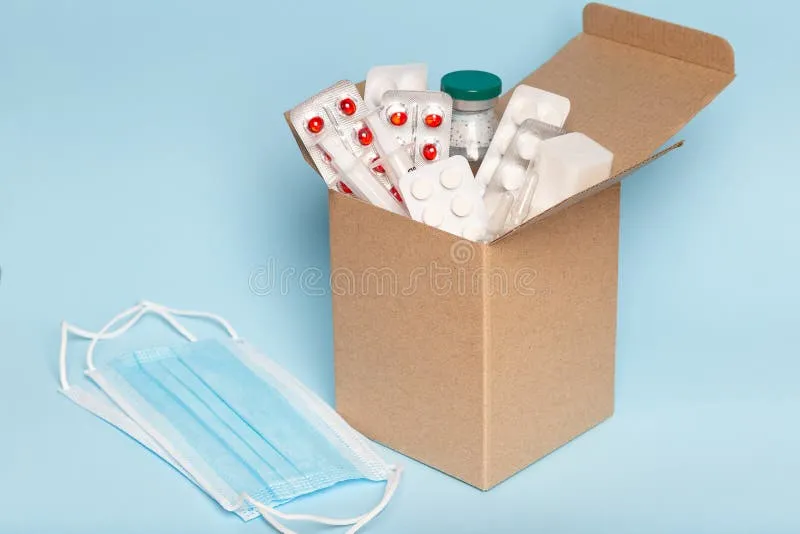
- The pharmacy declares contents accurately and ships in original, labelled packaging.
The customs officer who eventually handles your parcel — if anyone handles it at all — is looking for exactly these markers. Supplying them is not just good practice. It is what separates the packages that clear from the packages that don't.