Empty the Shelf, Count the Savings: A One-Weekend Medicine Cabinet Audit for American Households
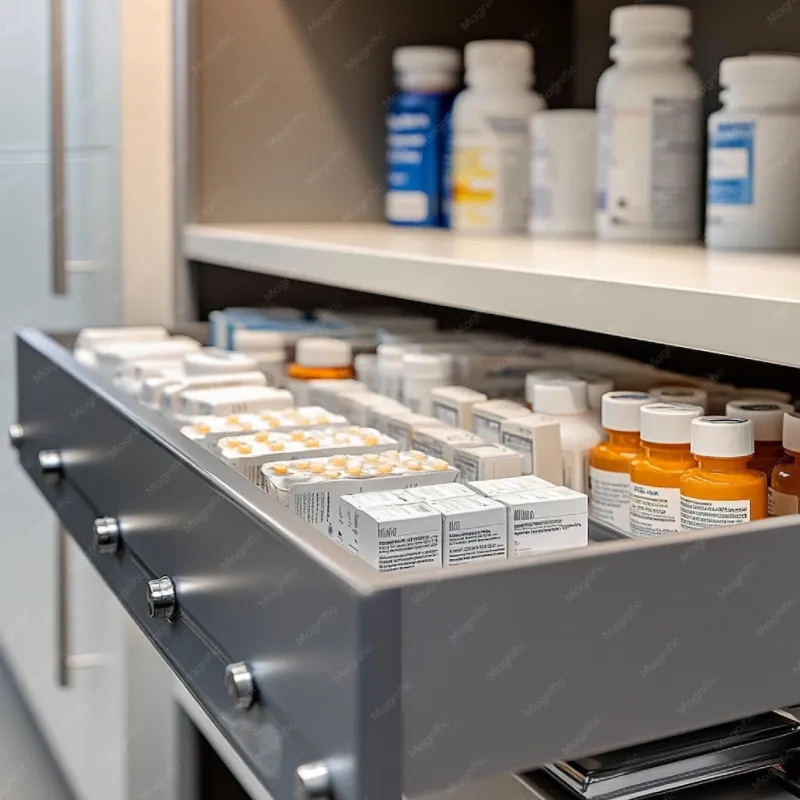
Photo: organized medicine cabinet with prescription bottles on counter, via img.freepik.com
Somewhere between the cough syrup from 2019 and the second bottle of ibuprofen you forgot you owned, your medicine cabinet has become a small, unexamined budget line. For many American households, that line adds up to hundreds of dollars a year — some of it wasted, some of it overpaid, and some of it safely recoverable with a few hours of honest sorting.
This is a project best done on a Saturday morning with a clear counter, a garbage bag, and a notebook. Here is how to run it.
Step One: Take Everything Out
Don't audit in place. Remove every bottle, box, and tube from the cabinet, the bathroom drawer, the kitchen shelf where the vitamins live, and the travel kit in the suitcase. An audit only works when you see the full inventory at once.
Lay items out in groups: prescription medications, over-the-counter products, vitamins and supplements, and anything you can't immediately identify. That last group matters — an unlabeled bottle is a safety question, not just a clutter problem.
Step Two: Sort Into Four Piles
Expired. Check every date. Expired medications lose potency and, in some cases, degrade into compounds you don't want in your body. Toss them — but not in the trash or toilet. Most pharmacies and many police stations run take-back programs, and the FDA publishes a short list of drugs that should be flushed if disposal sites aren't available.
Duplicates. Three tubes of hydrocortisone cream, two thermometers, a backup bottle of antacids in every bathroom. Duplicates are harmless financially only if you eventually use them. Consolidate, note the earliest expiry date, and stop rebuying what you already own.
Orphans. These are prescriptions for conditions that have changed — a discontinued dosage, a medication your doctor switched away from two years ago. Orphan drugs should be confirmed with your prescriber before disposal, since occasionally an old prescription is still relevant. More often, they're just clutter with a street value of nothing.
Active maintenance medications. This is the pile that pays for the whole project. Set aside every prescription you take regularly — statins, blood pressure medications, thyroid hormones, diabetes drugs, inhalers. These are the candidates for repricing.
Step Three: Price the Maintenance Pile
Now the worksheet part. For each active prescription, write down three numbers:
- What you paid at your last fill — the receipt, not the list price. Insurance, coupons, and discount cards all distort the sticker price.
- Your annualized cost — monthly fills multiply by twelve; 90-day fills multiply by four.
- The verified Canadian price — for the same generic molecule, same strength, from a licensed Canadian pharmacy.
The third number is where cross-border savings live. Because Canada regulates generic drug prices and negotiates at a national level, the same molecule manufactured to the same standards frequently costs a fraction of the American shelf price. A statin that runs $45 a month stateside might be under $15 from a licensed Canadian pharmacy. Multiplied across a household taking two or three maintenance drugs, that's easily a $400 to $600 annual difference.
A few rules keep this comparison honest. Compare generics to generics — brand names may differ by patent and market. Compare per-pill prices, not per-bottle, since package sizes vary. And confirm that any pharmacy you're pricing against requires a valid prescription and displays a license you can verify. A price that seems too good to be true usually comes from a site that never asked for your prescription at all.
Step Four: Reconcile With Your Prescriber
An audit is only useful if it changes behavior. Take your worksheet to your next appointment or pharmacist consultation. Ask three questions: Am I still taking everything on this list? Is a generic available for any brand I'm paying full price for? Would a 90-day supply — ordered domestically or from Canada — reduce my per-unit cost?
Pharmacists are, as a rule, delighted by patients who arrive with a written list. It makes their job easier and your regimen safer. The conversation also creates a paper trail: any medication you begin ordering from a Canadian pharmacy should be on record with your American prescriber, both for continuity of care and for your own protection.
The Printable Checklist
Run through this list for every item on your counter:
- Expiry date checked and recorded
- Purpose of the medication identified
- Prescriber confirmed (for prescriptions)
- Duplicate noted or eliminated
- Storage conditions appropriate (no bathroom humidity for tablets)
- Current price recorded from last receipt
- Canadian price checked and written beside it
- Annual savings calculated
What You'll Probably Find
Households that run this audit report a familiar pattern: a surprising volume of expired product, one or two forgotten prescriptions, and a maintenance list that is repricing poorly. The waste is the easy fix. The repricing is the durable one — because unlike the expired cough syrup, the gap between an American fill price and a Canadian one shows up again every single month.
A weekend of sorting doesn't just clean a cabinet. It turns an invisible expense into a managed one, and for households stretching a fixed income across prescriptions, that management is where real savings begin.