Three Orders, Three Flags: Inside the Quiet Safety Net of Canadian Pharmacy Review
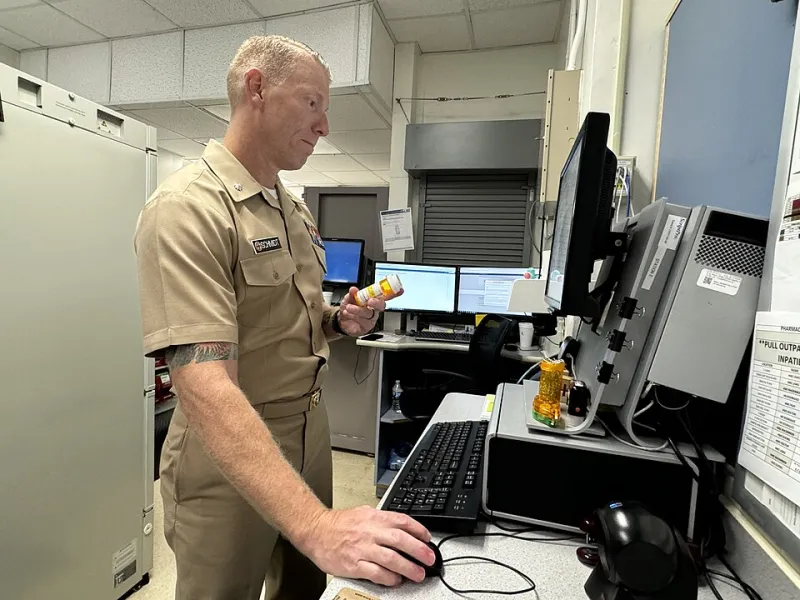
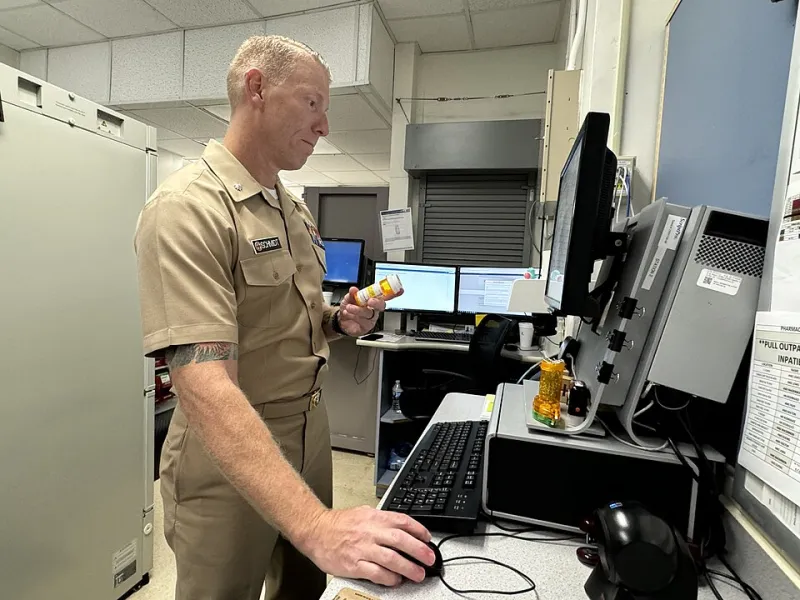
Photo: U.S. Navy NMRTC by Emily McCamy, Public domain, via Wikimedia Commons
When an American places an order with a licensed Canadian pharmacy, the transaction is often imagined as a simple exchange: prescription submitted, payment processed, package mailed. What rarely gets discussed is everything that happens between those steps — the clinical scrutiny applied to every order by a pharmacist who has never met the patient but is legally accountable for what leaves the counter.
To understand that process, it helps to follow three hypothetical orders through a typical review day at a licensed pharmacy in Canada. Each one arrives looking routine. Each one gets flagged. And each one illustrates a layer of protection most buyers never realize exists.
The First Order: A Dangerous Combination Hiding in Plain Sight
The first order comes from a retired schoolteacher in Ohio. She's ordered her blood pressure medication from the pharmacy before, so her profile is familiar. This time, though, she's added a new prescription — one for a fungal nail infection — alongside her existing statin.
On paper, nothing looks unusual. Both prescriptions come from legitimate American prescribers. The dosages are plausible. But when the pharmacist runs the standard interaction screen, the software flags a known conflict: the antifungal can dramatically raise statin levels in the blood, increasing the risk of muscle damage and, in severe cases, kidney injury.
This is the moment where an unlicensed operation would simply ship the order. A licensed pharmacist cannot. Under Canadian provincial regulations, the pharmacist must resolve the interaction before dispensing — which means picking up the phone.
In this scenario, the pharmacist calls the patient first, explains the concern in plain language, and asks for the prescribing physician's contact information. The physician's office confirms the antifungal was prescribed short-term and that the doctor was aware of the interaction and planned a reduced statin dose during treatment. With that documentation on file, the order proceeds — with a counselling note attached for the patient.
What the patient sees: a brief hold, a phone call she might initially find intrusive, and ultimately a safer outcome. What she doesn't see is the interaction screen, the documentation requirements, or the professional judgment that made the call in the first place.
The Second Order: A Dose That Doesn't Add Up
The second order is newer — a first-time customer in Arizona submitting a prescription for a thyroid medication. The prescription itself appears authentic. The trouble is the arithmetic: the prescribed dose is roughly triple the standard starting dose for that medication, and the patient's stated history suggests she's never taken it before.
A dose this far outside normal range is either a transcription error, a prescriber's deliberate choice, or a forged document. The pharmacist cannot guess which. So the order moves into what pharmacy staff call verification hold — a status the customer sees as "pending review" rather than a rejection.
The pharmacist attempts to reach the prescriber directly. In this hypothetical, the prescriber's office confirms the intended dose was one tablet daily, not three — a phrasing ambiguity on the written prescription had caused the patient to misread it. The corrected order is processed the same afternoon.
Had the prescriber been unreachable, the pharmacy's policy would have been clear: no dispensing without confirmation. That may frustrate a customer expecting quick service, but it reflects a principle baked into Canadian pharmacy practice — when in doubt, the medication waits.
The Third Order: The Prescription That Fails Verification
The third order is the hardest kind. A new customer submits a prescription for a controlled-attention medication, complete with what looks like an American clinic's letterhead. The document is polished. The signature is legible. But something about the formatting doesn't match the clinic's known prescription templates, and the prescriber listed cannot be verified at the licensing board.
The pharmacist escalates to the pharmacy's compliance lead. Attempts to verify the prescriber fail. The prescription is refused outright, the customer receives a written explanation, and the order is documented internally. No medication ships.
This is the outcome people fear when they worry about ordering from Canada — but it's actually the opposite of a scam. A counterfeit operation would take the money and ship whatever was in the warehouse. A licensed pharmacy refuses the sale, refunds the payment, and files the paperwork. The refusal is the credential.
Why This Layer Matters to American Buyers
The common thread across all three orders is that the safety net works invisibly. Patients see holds, phone calls, and occasionally refusals — but rarely understand them as evidence of a functioning system. In Canadian pharmacy regulation, the dispensing pharmacist is personally and professionally liable for every prescription filled. That liability is the engine behind every interaction screen, every verification call, and every refusal.
For Americans comparing online pharmacies, this suggests a practical test: ask what happens when an order raises a question. A legitimate pharmacy will describe a review process, a pharmacist you can speak with, and a willingness to contact your doctor. A site that promises instant shipping with no questions asked is telling you something important — just not the something it intends.
The pharmacist who says no isn't standing between you and your medication. They're standing between you and everything that could have shipped alongside it.
This article is for general information only and does not constitute medical advice. Always consult your physician or pharmacist about your medications.